
Contraception Management Services Offered in Tacoma, WA
Looking for birth control in Tacoma, WA? Rainier OB/GYN provides same-week appointments for birth control pills, shots, IUDs, and implants—offering expert, confidential women’s health care.
Family planning is an essential part of women’s health, which is why Steven Maynard, MD, offers comprehensive contraceptive management through his practice at Rainier OB/GYN in Tacoma, Washington. If you’re ready to explore all of the available options, call the office or schedule online to set up a personalized visit at your earliest convenience.
Copper and Hormonal IUD Insertions
We offer both hormonal and non-hormonal IUDs for birth control.
Hormonal IUDs (Liletta, Mirena):
These release a small, steady amount of hormone to prevent pregnancy. Ask about our in-stock Liletta if you’d like same-day insertion. Please note that brand choice can affect timing—Mirena may need to be ordered ahead of time.
Non-hormonal IUD (Paragard):
This copper IUD is completely hormone-free and provides long-term protection.
Depo-Provera (the birth control shot)
The birth control shot, known as Depo-Provera, is an injection given once every 3 months to prevent pregnancy. It contains a form of the hormone progesterone, which works by stopping ovulation and thickening cervical mucus to block sperm.
Because it’s only needed four times a year, many people find it a convenient option—no daily pill or device to remember. It’s a good choice for those who prefer a low-maintenance method or can’t use estrogen-based birth control.
The shot is given in the arm or buttock by a healthcare provider. Some people may notice changes in their period, mild weight gain, or other hormone-related side effects, which usually balance out over time.
Depo-Provera is safe, effective, and discreet, making it a solid choice for people who want long-lasting, reliable birth control without the daily upkeep.
Birth Control Pills
Birth control pills, also called oral contraceptives, are taken once a day to prevent pregnancy. They use hormones—usually a mix of estrogen and progesterone—to stop ovulation and make it harder for sperm to reach an egg.
Common brands include Yaz, Loestrin, and Ortho Tri-Cyclen. There are many options with slightly different hormone levels to fit individual needs. For those who can’t take estrogen, a progestin-only pill may be prescribed instead.
A newer option, Opill, is the first daily birth control pill available over the counter in the U.S., meaning you can buy it at most pharmacies without a prescription.
When taken correctly and consistently, the pill is one of the most effective and flexible forms of birth control. It also offers benefits beyond contraception, like lighter periods and improved acne for some users.
Birth Control Implants
The birth control implant is a small, flexible rod placed just under the skin of your upper arm. It releases a steady, low dose of progesterone to prevent ovulation and thicken cervical mucus, which helps block sperm.
The procedure takes only a few minutes and is done in a clinic using local anesthesia. Once inserted, the implant provides continuous protection for up to 3 years—no daily pills or regular appointments needed.
It’s one of the most effective and low-maintenance birth control options available. The implant can be removed at any time if you decide to stop or want to become pregnant, with fertility returning quickly afterward.
Birth Control Removal and Fertility
When you’re ready to stop using birth control, removal is usually simple and quick. For IUDs, a healthcare provider gently pulls on the strings attached to the device, and the arms fold in as it slides out through the cervix. The process takes just a few minutes and typically causes only mild cramping.
For implants, a small area of your upper arm is numbed with local anesthesia. We make a tiny incision to remove the flexible rod. The procedure is brief and done in our Tacoma, WA office.
In both cases, fertility usually returns right away. Some people may ovulate as soon as two weeks after removal. Costs can vary depending on your insurance, but removal is often covered as part of reproductive health care.
If you’re switching to a new method, we can help plan the timing so you stay protected throughout the transition.
Contraception Management Q & A
What are some birth control options?
Rainier OB/GYN offers a full range of birth control options, including pills, patches, shots (Depo-Provera), IUDs (hormonal like Liletta and copper), and implants like Nexplanon.
Birth control can be divided into two categories: barrier and hormonal methods.
Barrier birth control
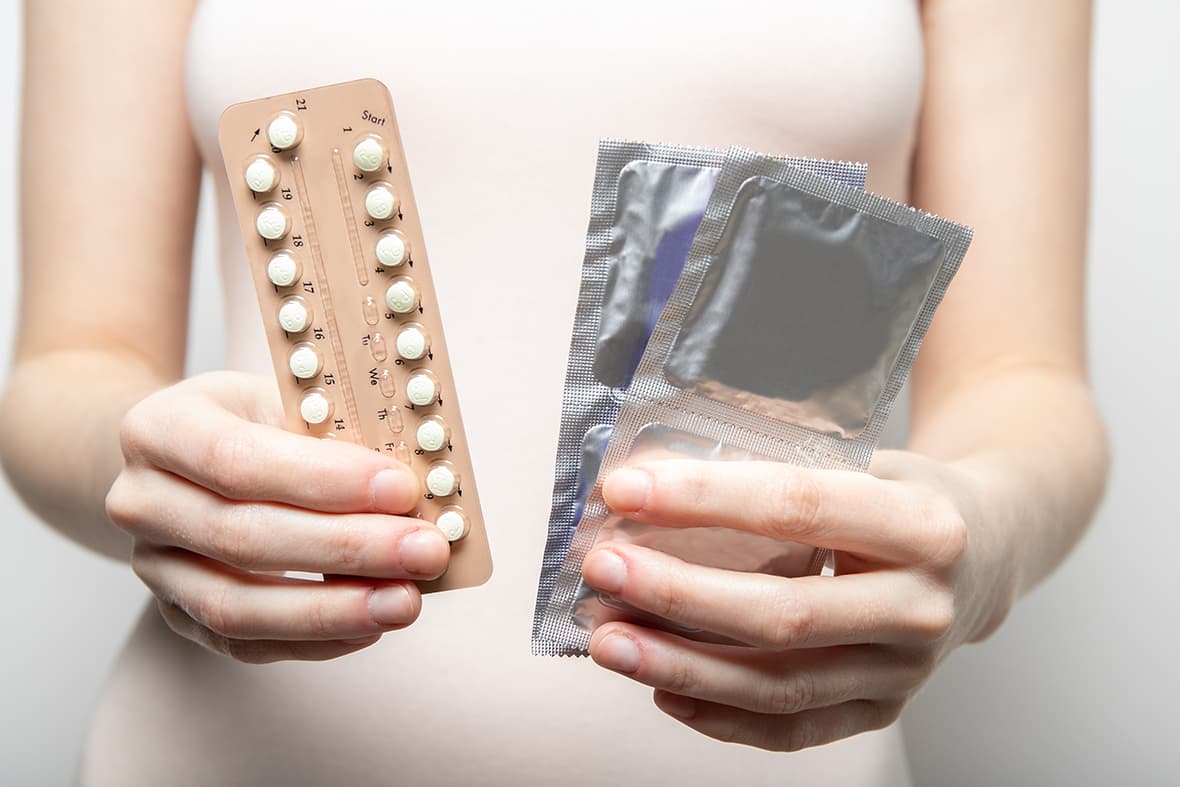
These methods of birth control create a physical barrier between sperm and egg to prevent unwanted pregnancy. Some examples include:
- Male or female condoms
- Cervical caps
- Diaphragms
- Sponges
You can add spermicide to any of these methods to create even more protection.
Hormonal birth control
These birth control methods alter your hormonal balance to reduce the risk of unwanted pregnancy. Some examples include:
- Pills
- Intrauterine device (IUD)
- Birth control implant (NexplanonⓇ)
- Patches
- Vaginal rings
- Birth control shots
Some hormonal options have numerous formulations, helping you find the right fit for your needs. For women who are certain a pregnancy is not in their future, tubal ligation offers a permanent birth control option.
How does contraception management work?
Birth control is a very personal choice, and you may find some options to be a better solution than others. Your contraceptive needs might also shift and change over time. No matter where you are in your reproductive life, Dr. Maynard offers personalized contraception management.
Many women need to try a few types of birth control before they find the right match. That is especially true if you’re also hoping to reduce menstrual bleeding in addition to preventing unwanted pregnancy. You might also want to switch to a completely new method and need more information about what to expect.
Finally, women who are planning to begin trying to conceive in the coming year may want to choose options that allow full fertility to return shortly after being discontinued. Dr. Maynard can help you navigate your birth control choices.
Which birth control options require little planning?
If you’re like many women, you want a birth control option that will provide reliable protection without having to remember to take a daily pill. Fortunately, there are some great options that will fit your busy lifestyle.
An intrauterine device (IUD) is a great way to protect against unwanted pregnancy over a long period. You’ll need to come into the office to have your IUD inserted, but once in place, it will prevent pregnancy for 3-5 years. While less common than hormonal options, Copper-based IUDs last nearly 10 years.
Nexplanon, the birth control implant, is another excellent low-effort option. The implanted device is only around the size and shape of a matchstick and is inserted via a quick in-office procedure using a hollow needle. You don’t have to do anything else for three years, at which point you can have the device replaced or discuss alternative options.
When you’re ready to learn more about contraception management, call the office to set up a visit. Online booking is also an option and is fast and easy.
What should you expect at the first gynecologic visit?
The first visit might only be a conversation between you and the doctor. This will also set a schedule for your future visits and advice from the doctor to stay healthy and take any precautions if needed. The doctor can ask you numerous questions regarding your health and medical issues to understand your case better. In some cases, few tests are also done on the first visit.
Do I need an appointment for birth control, or can I walk in?
Appointments are typically required for birth control services at Rainier OB/GYN, as they provide routine gynecology including contraception management. Walk-ins are not standard for procedures like IUD insertions or shots.
Does Rainier OB/GYN take insurance for birth control?
Rainier OB/GYN accepts insurance for birth control, aligning with Washington state law requiring coverage of all prescription and over-the-counter methods at no cost, including related appointments.
How soon does the birth control shot start working?
The birth control shot (Depo-Provera) starts working immediately if given within the first 7 days of your menstrual cycle; otherwise, use backup contraception for 7 days.
Which birth control method lasts the longest?
The copper IUD (Paragard) lasts the longest at up to 10-12 years, followed by hormonal IUDs like Liletta (8 years) and implants (3-5 years). However the biggest drawback of the copper IUD Paragard is heavier and more painful menstrual periods.
Can you remove my IUD or implant?
Yes, Rainier OB/GYN can remove IUDs or implants in a short office procedure.
What’s the difference between Liletta and Mirena?
Both Liletta and Mirena are highly effective (>99%) hormonal levonorgestrel-releasing IUDs (52 mg each) with similar side effects such as cramping and spotting.
Both last up to 8 years for birth control and up to 5 years for treating heavy menstrual bleeding. Rainier OBGYN stocks Liletta in-office, allowing insertion during the same consultation visit.
Can I start birth control right after giving birth?
Yes, you can start methods like progestin-only IUDs, implants, or shots right after birth; avoid estrogen-based options if breastfeeding.
What should I expect during an IUD or implant insertion?
During an IUD insertion, your provider will perform a quick pelvic exam, insert a speculum to access the cervix, clean the area, and gently place the folded IUD through the cervix into the uterus using a thin tube, then trim the strings and remove the tools—all in a brief office procedure lasting 5-10 minutes that may cause cramping similar to strong menstrual pain. For an implant procedure like Nexplanon, the process involves numbing a small area under the skin on the inner side of your upper arm, then inserting the thin, flexible rod
using a special applicator. It takes only a few minutes and may cause mild soreness or
bruising afterward. Both procedures are usually quick, done in-office, and can cause mild to moderate cramping or discomfort, which generally subsides soon after.
How soon after stopping birth control can I get pregnant?
Fertility can return immediately after stopping most birth control methods, allowing
pregnancy as soon as the next ovulation, though it varies by type and individual factors like age and health. By Birth Control Type:
-Pills, patches, rings, or hormonal IUDs: Ovulation often resumes within days to weeks; about 80-83% conceive within 12 months.
-Implant (Nexplanon): Fertility returns quickly upon removal, typically within weeks to 3 months for cycles to normalize.
-Copper IUD: No delay, as it doesn’t suppress ovulation—pregnancy possible in the same cycle after removal.
-Depo-Provera shot: Longest delay, up to 10-18 months for full fertility return. Consult a doctor if cycles don’t normalize after 2-3 months or after a year of trying to conceive.
How do I switch birth control methods safely?
You can switch birth control methods directly with no gaps; overlap if needed (e.g., start new pills 7 days before
stopping IUD) and use backup like condoms per guidelines.
Are same-day or next-day birth control appointments available?
Same-day appointments may be available for urgent gynecology needs; call Rainier OB/GYN to check.
What if I miss a birth control pill or shot?
For pills: Take missed dose ASAP, use backup 7 days if 2+ pills missed.
For shots: If more than 13 weeks late, use backup until next dose and test for pregnancy.
How much does birth control cost with and without insurance?
With insurance: $0 under WA law.
Without: Cost varies; call Rainier OBGYN billing to check.
Is birth control safe while breastfeeding?
Progestin-only methods (mini-pill, implant, Depo shot, hormonal IUD) are safe; avoid estrogen-containing ones if you are breastfeeding.
Where can I get emergency contraception or the morning-after pill?
Emergency contraception or morning-after pills are available over-the-counter at WA pharmacies (Plan B) without age limits, or as IUD/prescription from providers like Rainier OB/GYN; effective up to 5 days post-sex.